
DIY or Hire a Concrete Contractor? How to Decide
Understanding DIY Concrete Projects
Tackling a concrete project requires understanding whether to DIY or hire a contractor.
Essential Skills for DIY Concrete Work
Successful concrete pouring involves basic skills:
- Leveling: A steady hand is essential for an even finish.
- Mixing: Proper mixing is crucial for strength and durability; a concrete mixer or wheelbarrow and shovel will suffice.
- Finishing: Surface finishing techniques significantly impact the project's overall look and longevity.
- Safety Awareness: Familiarity with safety measures, such as proper lifting techniques and personal protective equipment, is essential.
Common Mistakes in DIY Concrete Projects
Many homeowners misstep in their DIY endeavors:
- Poor Planning: Inaccurate measurements can waste materials and time.
- Mixing Errors: Incorrect water-to-concrete ratios compromise strength.
- Neglecting Reinforcement: Skipping rebar or wire mesh increases the risk of cracking.
- Ignoring Drying Conditions: Environmental factors affect drying; neglecting to cover the concrete can lead to defects.
When It’s Best to Hire a Concrete Contractor
Certain situations warrant professional assistance instead of DIY.
Benefits of Hiring Professionals
Bringing in a concrete contractor comes with several advantages:
- Experience and Skill: Their expertise ensures a better-quality final product.
- Project Efficiency: Professionals often complete jobs faster thanks to their specialized training and tools.
- Equipment Access: They possess the necessary heavy machinery and specialized tools for larger projects.
- Quality Assurance: Many contractors offer warranties, giving homeowners peace of mind.
Scenarios Where DIY Is Not Recommended
Consider hiring for:
- Large Areas: Driveways demand precise logistics and execution.
- Complex Projects: Decorative or stamped concrete requires advanced skills.
- Building Code Compliance: A contractor ensures adherence to local regulations.
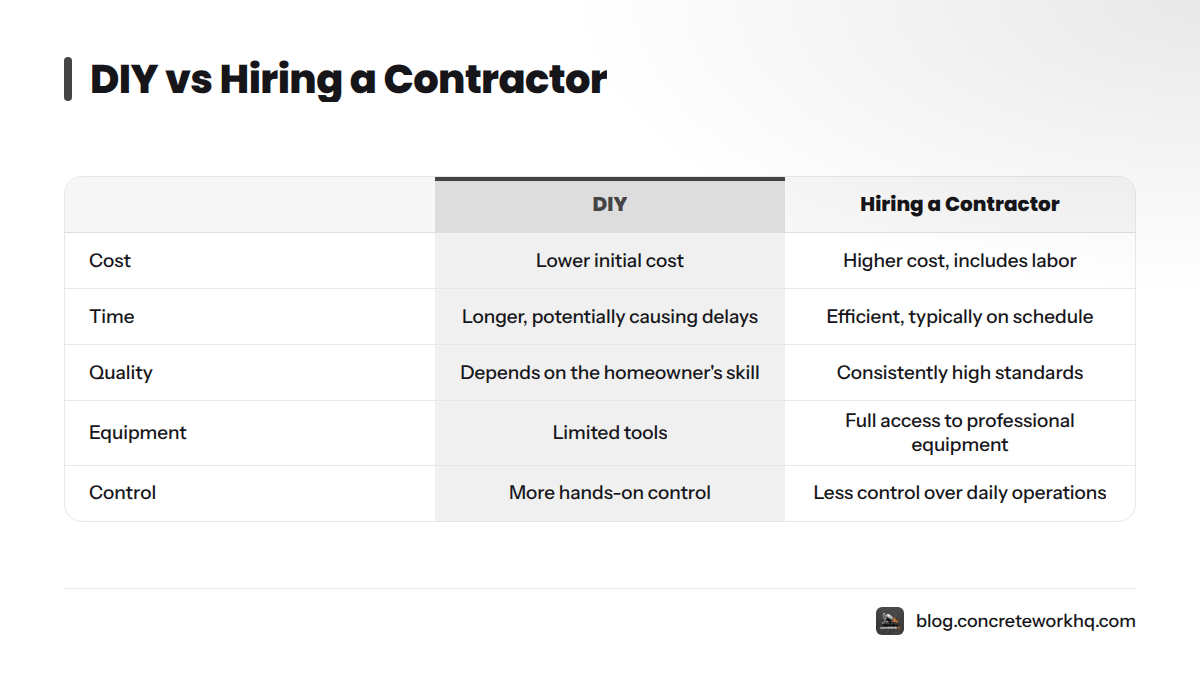
Comparing DIY and Hiring a Contractor
Here's a quick reference comparing both options:
| Aspect | DIY | Hiring a Contractor |
|---|---|---|
| Cost | Lower initial cost | Higher cost, but includes labor |
| Time | Longer, potentially causing delays | Efficient, typically on schedule |
| Quality | Depends on the homeowner's skill | Consistently high standards |
| Equipment | Limited tools | Full access to professional equipment |
| Control | More hands-on control | Less control over daily operations |
Key Factors to Consider for Your Concrete Project
Evaluate the following before deciding:
Project Types and Requirements
- Small Repairs: Some may be manageable with basic tools.
- Driveway Installations: Generally, these require professional expertise.
- Patios or Decorative Projects: These benefit from design and finishing expertise.
Safety and Cost Considerations
- Personal Safety: Hiring may help reduce injury risks.
- Cost Analysis: Compare total material costs with contractor fees; professionals often secure bulk purchasing discounts.
Homeowner Testimonials
Success Stories
Some homeowners have successfully tackled DIY projects:
- John M. : "Pouring my own patio saved me about $1,500, but it took twice as long. The results weren't perfect, but I learned a lot!"
Lessons from Failed DIY Attempts
Not all DIY experiences go smoothly:
- Sarah T. : "I thought I could handle my driveway, but the mix was wrong. It cracked quickly, forcing me to hire a contractor at a higher cost."
Making the Best Decision: DIY or Hire?
To determine the best approach for your concrete project, download our DIY-vs-hire decision checklist.
Common Reader Questions
- What are the pros and cons of DIY concrete projects? DIY projects tend to be cheaper but may lack reliability compared to hiring professionals.
- When is it advisable to hire a concrete contractor? Consider hiring for large or complex projects, such as driveways.
- What skills are needed for successful DIY concrete work? Basic mixing and finishing skills, along with safety awareness, are essential.
- How can I avoid common DIY mistakes in concrete work? Effective planning, accurate mixing, and attentiveness to drying conditions can help you avoid common pitfalls.
- What costs should I anticipate when hiring a contractor? Costs vary based on the project's size, complexity, and location and typically include labor and materials.
For further guidance, check out this informative video on Should I DIY or Hire a Contractor? - DIY Tips and Tricks.
By thoughtfully assessing your options and skills, you’ll be equipped to make an informed decision, whether you choose to DIY or hire a contractor. Knowledge is key to a successful concrete project!