
What is a Concrete Slab?
A concrete slab is a flat, continuous surface made from concrete, commonly utilized as a foundation for various structures such as garages, sheds, and patios. These slabs provide a stable base that distributes weight evenly while acting as a barrier against moisture. The construction process typically involves pouring concrete into forms to create a level, smooth surface.
Types of Concrete Slabs for Homeowners
Selecting the right type of concrete slab for your project is essential. Here are some common options:
- Residential Concrete Slabs: These are used in homes for foundations, floors, or patios.
- Garage Slabs: Designed specifically for vehicle weight and typically reinforced for extra support.
- Shed Pads: Smaller slabs that provide a base for garden sheds or storage units.
| Type of Slab | Application | Key Features |
|---|---|---|
| Residential Slab | Home foundations, floors | Generally thick and durable |
| Garage Slab | Vehicle parking areas | Reinforced for heavy loads |
| Shed Pad | Outdoor storage structures | Smaller, easier to install |
Considerations Before Pouring a Concrete Slab
Before starting your concrete slab project, consider these aspects:
- Site Preparation: Ensure the ground is level and free of debris.
- Climate Factors: Local weather conditions matter; concrete cures best in moderate temperatures.
- Permitting and Regulations: Confirm whether local building codes require permits for your slab installation.
Concrete Slab Preparation Steps
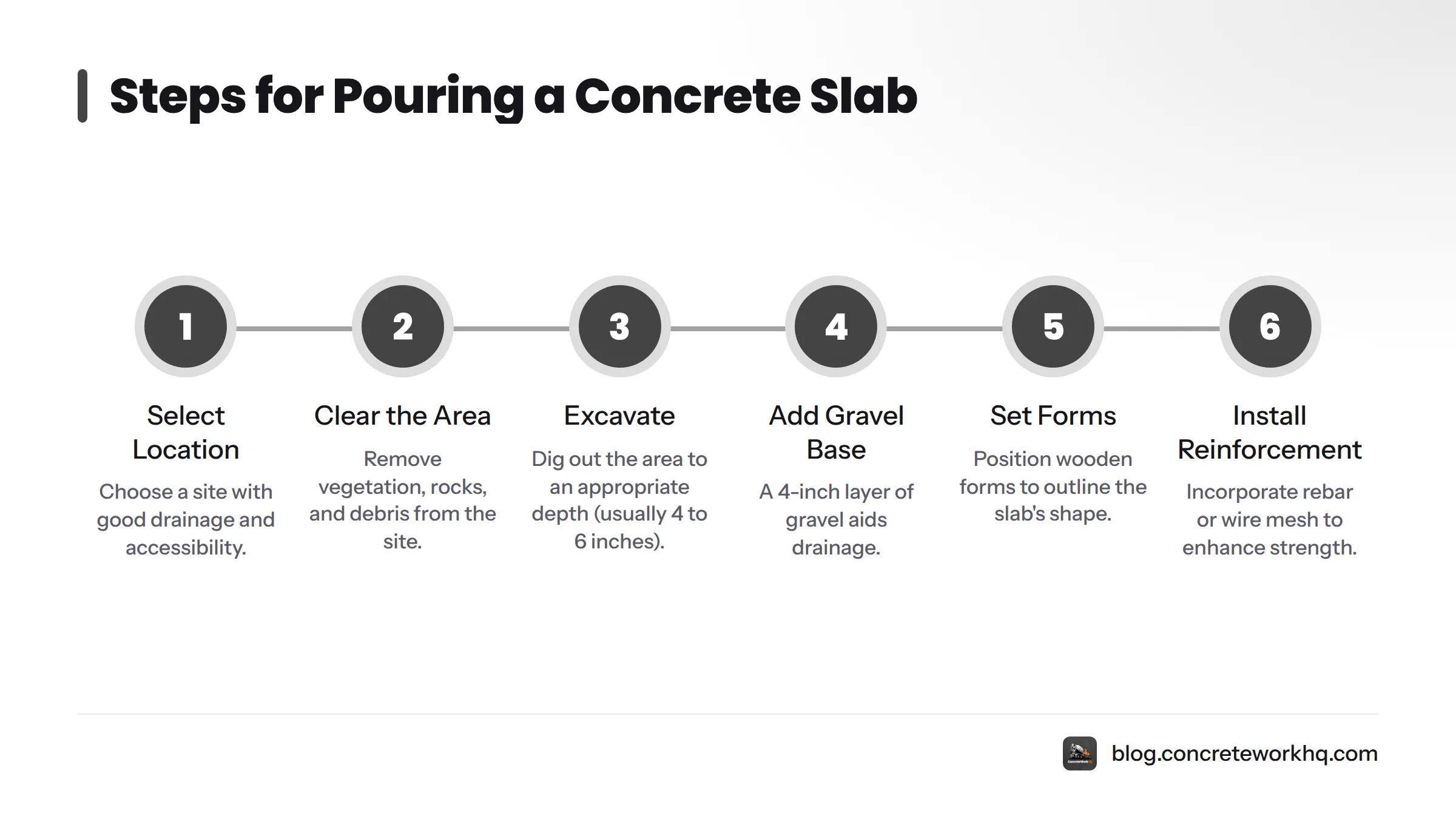
Proper preparation is crucial for successful installation. Here’s a step-by-step guide:
- Select Location: Choose a site with good drainage and accessibility.
- Clear the Area: Remove vegetation, rocks, and debris from the site.
- Excavate: Dig out the area to an appropriate depth (usually 4 to 6 inches).
- Add Gravel Base: A 4-inch layer of gravel aids drainage.
- Set Forms: Position wooden forms to outline the slab's shape.
- Install Reinforcement: Incorporate rebar or wire mesh to enhance strength.
For more details, read our guide on preparing the site and soil before the pour.
Common Mistakes to Avoid
Avoid these pitfalls during your project:
- Ignoring Drainage: Proper drainage prevents water accumulation, which can weaken the slab.
- Insufficient Reinforcement: Not adding rebar can compromise the slab's integrity.
- Poor Site Preparation: Ensure a clean, level area to prevent settling issues later on.
How to Choose the Right Type of Slab for Your Project
Your choice of slab type should be based on your specific needs:
- For Vehicles: Opt for a thicker, reinforced garage slab.
- For Gardens: A lighter shed pad may suffice.
- For Patios: Consider a decorative finish for aesthetic purposes.
Finding Local Contractors for Your Concrete Project
To ensure quality workmanship, locate a concrete contractor in your area. Look for someone who:
- Has positive customer reviews.
- Provides detailed estimates.
- Is knowledgeable about local building codes.
Check our comprehensive directory for vetted concrete contractors .
Frequently Asked Questions
What is the difference between a concrete slab and a concrete pad?
A concrete slab is generally larger and thicker, making it suitable for foundations, while a concrete pad typically refers to smaller slabs used for outdoor structures like sheds.
Can I pour a concrete slab myself?
Yes, with the right tools and knowledge, pouring a concrete slab yourself is possible. For more guidance, check out this DIY guide .
What goes under a concrete slab?
Typically, a gravel base and a vapor barrier are used to ensure adequate drainage and protect the concrete from moisture.
How long should a slab cure before use?
A concrete slab should cure for at least 7 days for light use and up to 28 days to achieve full strength.
What materials are needed for a concrete slab?
Key materials include gravel, rebar or wire mesh, concrete mix, and formwork. For detailed instructions on necessary materials, read our article on how to pour a concrete slab .
What tools are essential for pouring a concrete slab?
Essential tools include:
- Concrete mixer or wheelbarrow
- Shovel and trowel
- Leveling tools
- Safety gear such as gloves and goggles
For comprehensive assistance in project planning, check our article on residential concrete foundation types .
Conclusion
With the right preparation and knowledge, pouring a concrete slab can be an efficient and rewarding project. By understanding the various types, preparation steps, and how to select a qualified contractor, you pave the way for a successful installation.